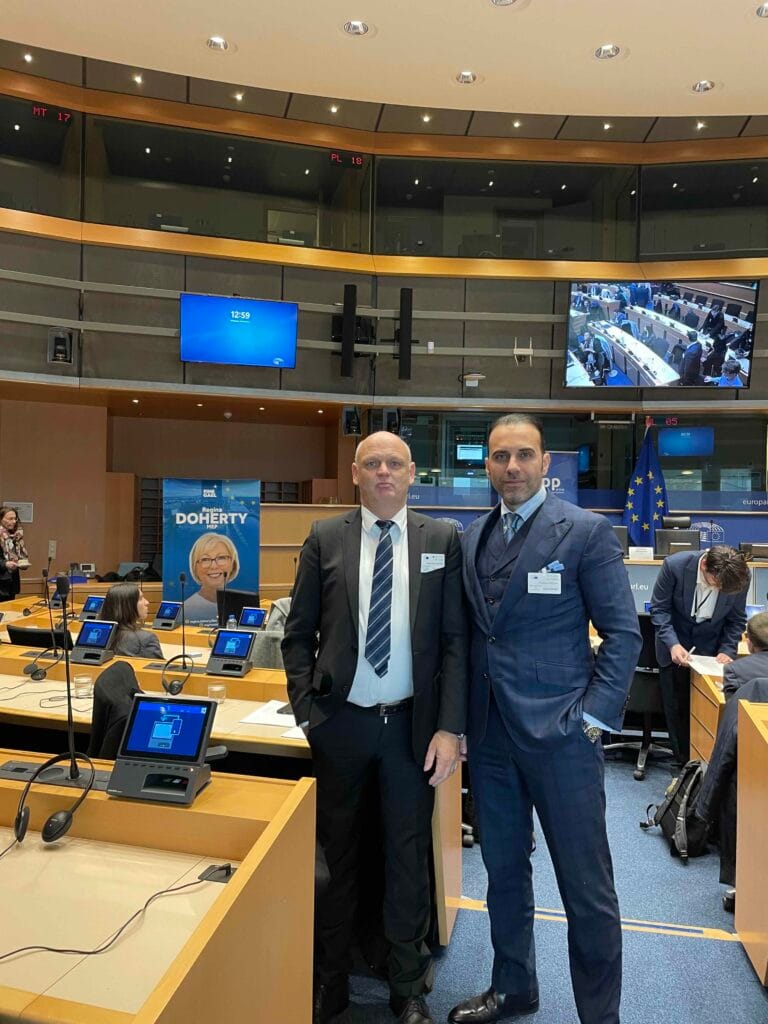
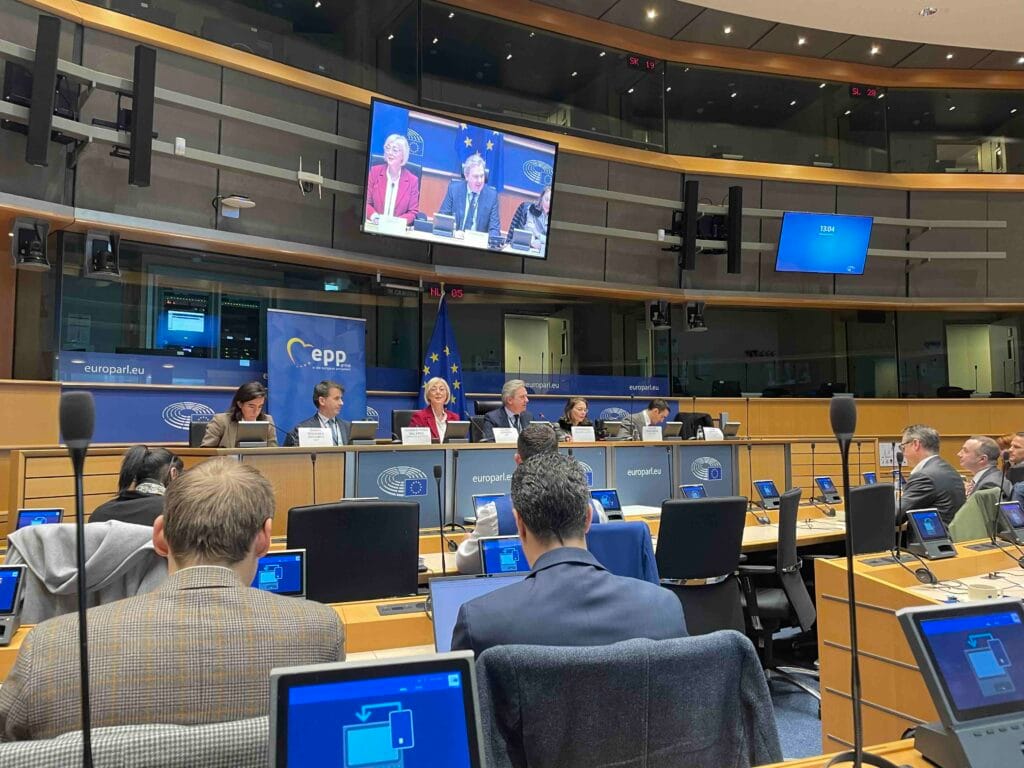
TURN Advisory was honoured to be invited by AML Intelligence and Stephen Rae to attend the Compliance Council at the European Parliament in Brussels, alongside my colleague and co-managing partner at Turn Advisory, Dr Ulrich Göres.
The roundtable brought together senior EU policymakers, regulators and industry leaders, including:
- Regina Doherty, MEP
- Isabel Benjumea, MEP
- Claude Bocqueraz, DG FISMA
- Julien Jardelot, LSEG
- Gonzalo Perez del Arco, American Express
as well as the wider Compliance Council community.
Our intervention focused on regulatory gaps for DNFBPs.
During the discussion, we raised a structural challenge that is becoming increasingly apparent in practice:
The current AMLR and supervisory framework focus very strongly on the financial sector, especially in the drafting of RTS and ITS. However, the non-financial sector must comply with the same rules, yet lacks comparable technical guidance and institutional support.
Key points we addressed:
- The first RTS drafted by the EBA primarily addresses the financial sector.
- The European Commission asked the EBA to clarify which elements are relevant for DNFBPs, which was an anticipated step but is insufficient in practice.
- The EBA responded that the AMLA should develop separate RTS for the non-financial sector, particularly with regard to customer due diligence.
- This raises a crucial question:
Who will define the RTS/ITS for DNFBPs when there is no equivalent institution to the EBA for the non-financial sector? - With only 1.5 years until full implementation, obliged entities — particularly larger ones — risk facing significant time constraints without clear technical standards and guidance.
We emphasised that the principles of harmonisation and proportionality, which were mentioned repeatedly during the event, must now be translated into concrete action.
In particular, proportionality must be embedded directly into the RTS/ITS to ensure that the requirements can be implemented by small and medium-sized DNFBPs.
Following the event, we had a constructive and forward-looking discussion with Claude Bocqueraz (DG FISMA) about this issue, and we agreed to continue the dialogue.
Our takeaways
The AMLR and AMLA represent a historic opportunity for Europe to modernise and harmonise its AML/CFT framework.
However, this can only succeed if:
- DNFBPs receive clear, sector-specific RTS/ITS;
- Consistent expectations must be established across all obliged entities.
- Proportionality must be embedded directly into the RTS and ITS to ensure that small and medium-sized DNFBPs can implement requirements effectively.
- A realistic implementation timeline.
- Stronger inclusion of non-financial sectors in EU-level regulatory framework.
We look forward to support this process through Turn Advisory’s work with supervisors, policymakers, and obliged entities across Europe.